Shop fabrication · Albany, NY
Metal wall panel shop fabrication in Albany, NY
CNC-routed ACM and brake-formed aluminum plate panels fabricated to your approved shop drawings, labeled by elevation and crated for your crew or ours.
Call or text (518) 888-7938
Book spring work now. Winter assessments and estimates available.
Updated November 2026
AI-generated illustration
Short answer
We fabricate commercial metal wall panels in our Albany shop from your approved shop drawings, serving installers, general contractors and building owners. Our shop work covers CNC routing, return folding, corner assembly, back stiffeners and perimeter extrusions on ACM and aluminum sheet stock, labeled and wrapped for delivery or pickup. Send shop drawings or elevations for free pricing.
Key facts
- Service area
- Albany, Schenectady, Troy, Saratoga Springs, Clifton Park, Glens Falls and jobs within about two hours of Albany.
- Season
- Panel installation runs most of the year. Sealant joints and barrier work are done on dry, frost-free surfaces.
- Who does the work
- Our own crews, from The Dom Construction Group LLC.
- Insurance
- General liability, umbrella and workers' compensation insurance; certificates on request.
- Estimates
- Free. Start with 3–5 photos by text, or use the form.
- Reply
- We reply within one business day, Monday to Friday.
CNC routing and return folding from shop drawings
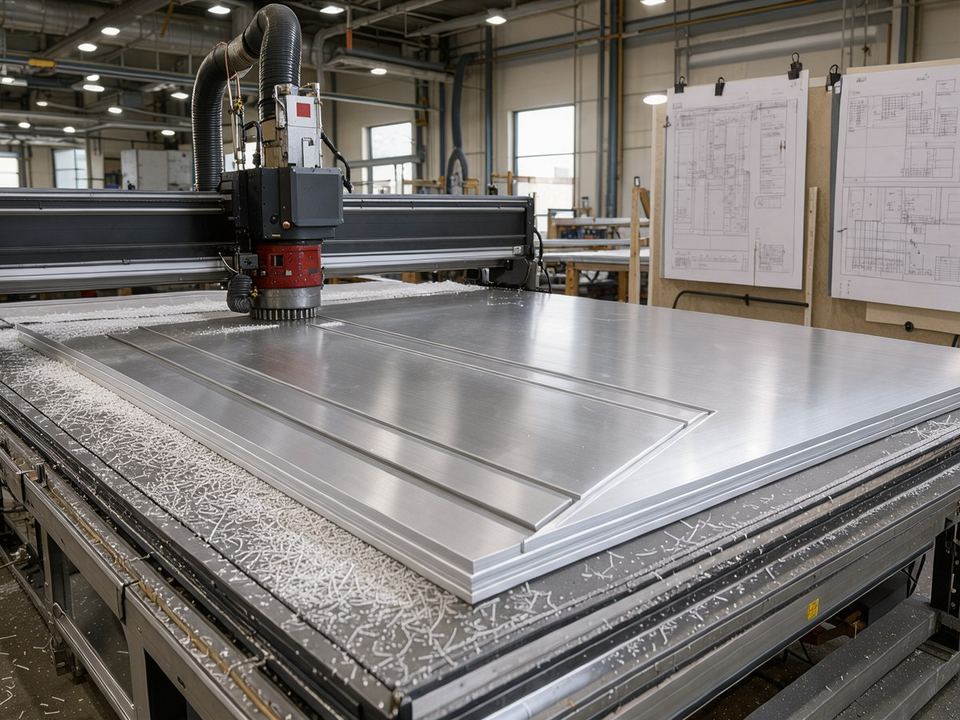
Accurate field installation starts on the router table. In our Albany shop, we fabricate commercial metal wall panels directly from your project's approved, engineered shop drawings. Flat sheets are nested for grain and finish direction (critical on metallic, mica and brushed coatings where rotating a panel 90 degrees changes how daylight reflects off the wall) and cut to exact module dimensions on a CNC router or panel saw.
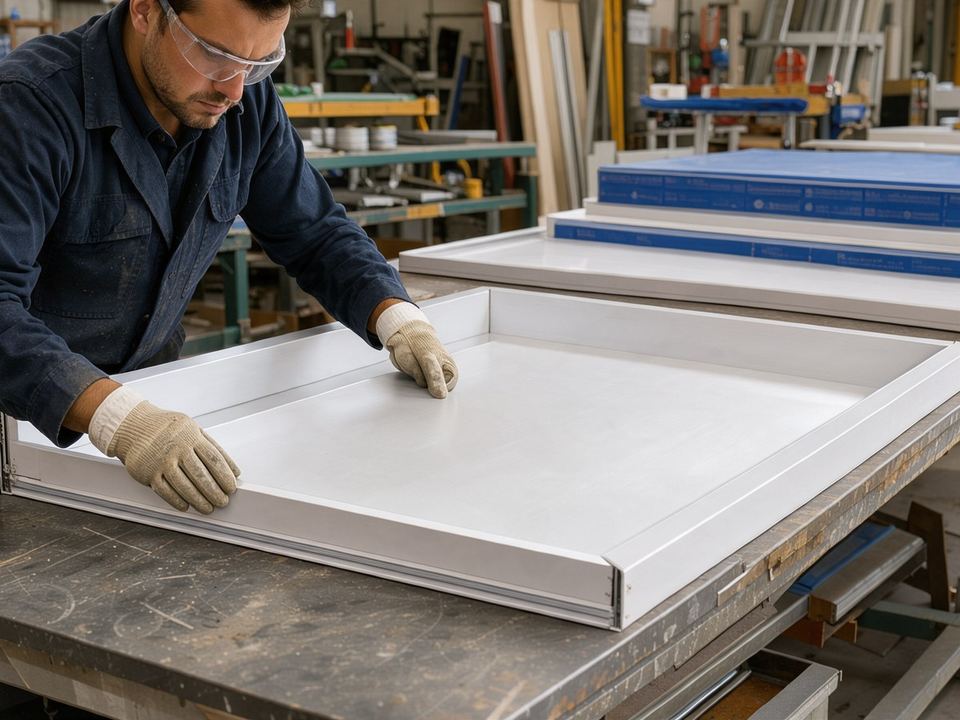
For route-and-return panel systems, the CNC router mills precision V-shaped or U-shaped grooves through the rear aluminum skin and most of the inner core while leaving the painted exterior face skin untouched. Shop technicians then fold the perimeter returns by hand or press brake to form a rigid four-sided tray, typically 1 to 2 inches deep. That routed fold produces the clean, tight corner radius that distinguishes composite facade panels from light-gauge sheet metal.
Sheet stock, cores and PVDF facade finishes
We fabricate panels from project-specified coil-coated sheet stock in common commercial widths up to roughly 60 inches and long custom sheet lengths:
- ACM / MCM sheet: Commonly 4 mm thick (with 3 mm and 6 mm stock available when specified), using polyethylene (PE) cores where permitted on signage and low-rise work, or mineral-filled fire-retardant (FR) and noncombustible A2-type cores where the drawings require an NFPA 285 tested exterior wall assembly.
- Single-skin aluminum plate: Solid 0.080 to 0.125 inch aluminum sheet sheared, routed and brake-formed into heavy-duty wall pans, column wraps, soffits and parapet copings.
Standard architectural finishes include factory-applied PVDF fluoropolymer coatings, FEVE high-gloss or matte clear coats, anodized-look finishes, and printed wood-grain or stone visuals. Every sheet keeps its directional arrows and factory peel-off film intact throughout cutting and folding so the finish stays protected until hanging is complete.
Corners, stiffeners and attachment hardware
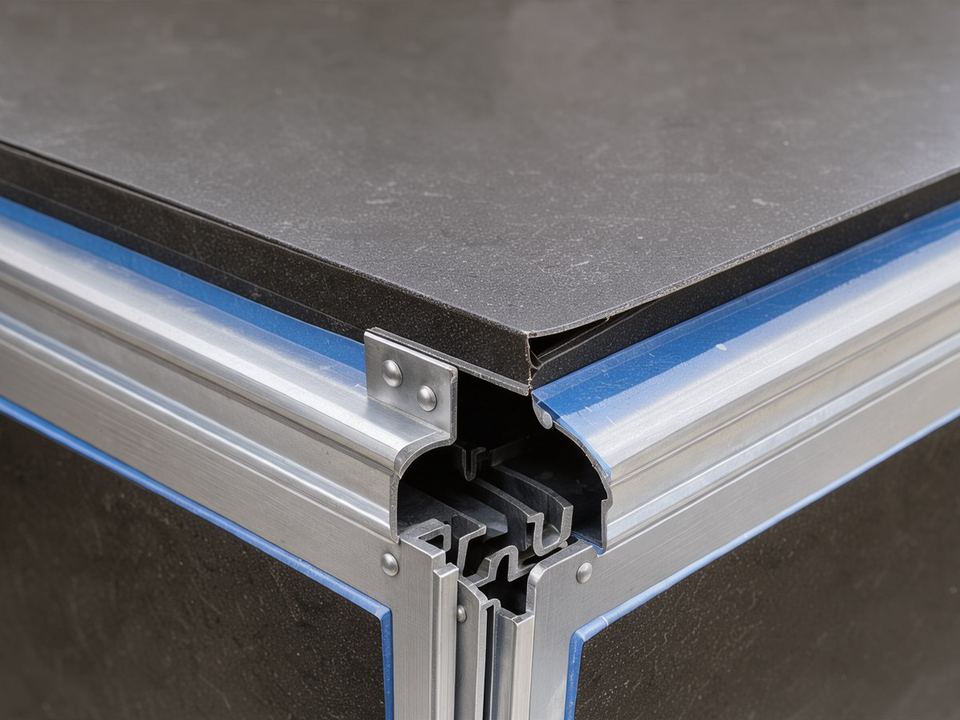
Once panel returns are folded, corners are closed and reinforced with aluminum corner angles, blind rivets or internal clips according to the system detail. Depending on whether the elevation uses a face-sealed wet joint or a drained rainscreen, our shop attaches perimeter aluminum extrusions, hook-on rainscreen clips or continuous mounting tracks to the returns.
Larger panel modules receive aluminum hat-section or channel stiffeners structurally bonded to the rear skin with high-strength adhesive tape and structural sealant. Those stiffeners prevent wind-load deflection and keep broad facade faces flat without oil-canning or face fasteners.
Labeling, protection and crating for the jobsite
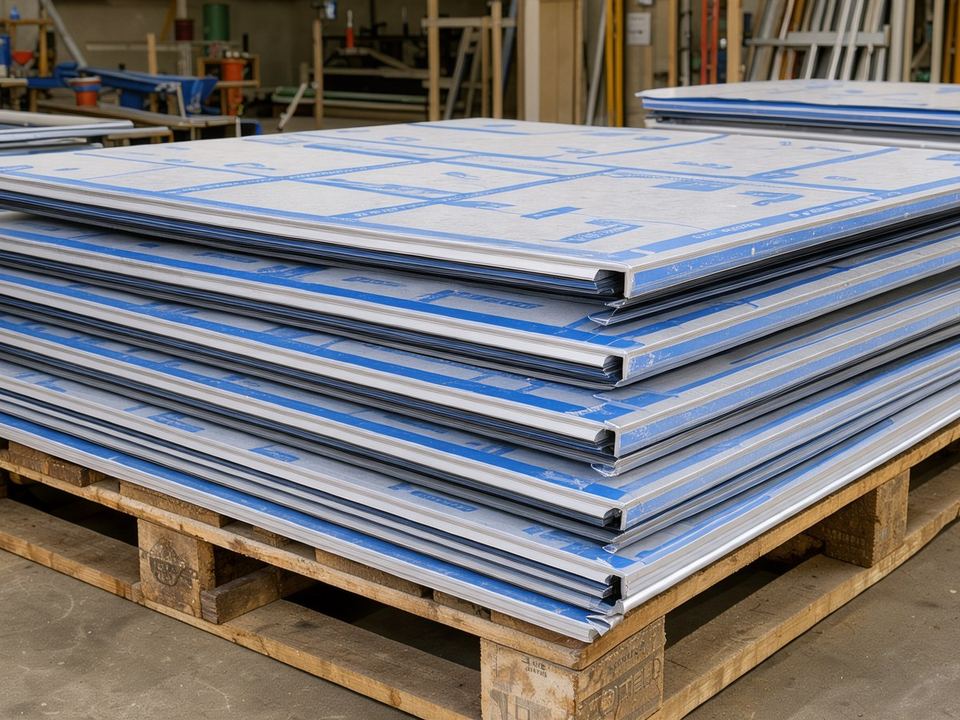
Finished panels are inspected against the shop ticket for length, width, diagonal squareness and return depth. Each unit is marked on the back or return with its exact elevation grid and panel tag from the shop drawing layout, separated with protective foam interleaving, wrapped and stacked on pallets or crates in installation sequence.
Contractors across the Capital Region and Hudson Valley order shop fabrication two ways: paired with our own field installation crews as one combined subcontract, or fabrication-only for pickup at our Albany facility or flatbed delivery to your jobsite. Use our bid request page or contact form to send shop drawings for free pricing.
Our shop fabrication sequence
Every panel order follows your approved shop drawings from flat coil-coated sheet to labeled jobsite crate.
Shop ticket verification and nesting
We check approved panel dimensions, return depths and finish directional arrows before nesting sheets for cutting.
CNC routing and shearing
Precision V- or U-grooves are milled through the rear skin and core on ACM, or solid plate blanks are sheared and notched.
Return folding and hardware assembly
Edges are folded into rigid trays, corners are closed with angles and rivets, and clips, extrusions and back stiffeners go on.
Tagging, interleaving and crating
Panels keep their peel-off film, receive elevation tags matching the layout drawing, and stack with foam padding.
Inside the route-and-return shop process
AI-generated illustration
AI-generated illustration
AI-generated illustration
Panel fabrication questions
What drawings do you need to fabricate a panel package?
For fabrication-only orders, we work from approved shop drawings and panel cut tickets showing flat patterns or finished tray dimensions, return depths, corner conditions, extrusion or clip types, stiffener placement and finish grain direction. During bidding, architectural elevations, wall sections and Division 07 specifications are enough to prepare preliminary fabrication pricing.
How does route-and-return fabrication work on composite panels?
On a CNC router table, a profiling bit cuts a V-shaped or U-shaped groove through the rear aluminum skin and nearly all of the core, stopping just behind the painted exterior aluminum face skin. Technicians then fold the perimeter edges along those routed lines into a crisp 1-inch to 2-inch deep tray without cracking the finish.
What maximum sheet sizes are common for commercial ACM fabrication?
Commercial ACM coil-coated stock commonly comes in widths up to roughly 60 inches and custom mill lengths suited to story-height or horizontal spandrel modules. Accounting for 1-inch to 2-inch folded returns on all four edges, finished panel faces are sized on shop drawings to maximize sheet yield and align cleanly with window mullions.
Do you attach stiffeners and perimeter extrusions in the shop?
Yes. Depending on the specified attachment system, our shop closes panel corners with angles and rivets, installs perimeter aluminum extrusions or rainscreen hanging clips on the returns, and bonds aluminum stiffener bars across the back of wider modules with structural tape and adhesive sealant so panels arrive ready to hang.
How are fabricated panels labeled and packaged for another installer?
Every fabricated panel is checked for squareness and return dimensions, then marked on the back or return flange with the exact elevation and panel number from your shop drawing layout. Panels keep their protective face film, get separated with foam padding to prevent chafing, and are stacked on pallets or crates in hanging sequence.
Price a fabrication-only panel order
Send shop drawings, panel schedules or architectural elevations for pickup or delivery pricing.
Field installation and panel types
- Field installation
Pair our Albany shop work with our own insured field installation crews.
- ACM wall panels
PE-core and FR-core aluminum composite material in PVDF facade finishes.
- Aluminum plate panels
Solid 0.080 to 0.125 inch brake-formed pans, column covers and copings.
- GC bid requests
Send Division 07 specs and architectural drawings for commercial bid pricing.
Need routed and folded panels for your own crew?
Book spring work now. Winter assessments and estimates available.