ALBANY METAL PANELSFABRICATE · INSTALL · BOTH (home) Call or text (518) 888-7938 Free estimate

Portland cement stucco · Capital Region, NY

Cement stucco repair, refinishing and three-coat installation

Hard-coat Portland cement stucco over metal lath or concrete block, hollow-spot delamination repairs and breathable refinishing by our own experienced crew.

Call or text (518) 888-7938

Book spring work now. Winter assessments and estimates available.

Updated November 2026

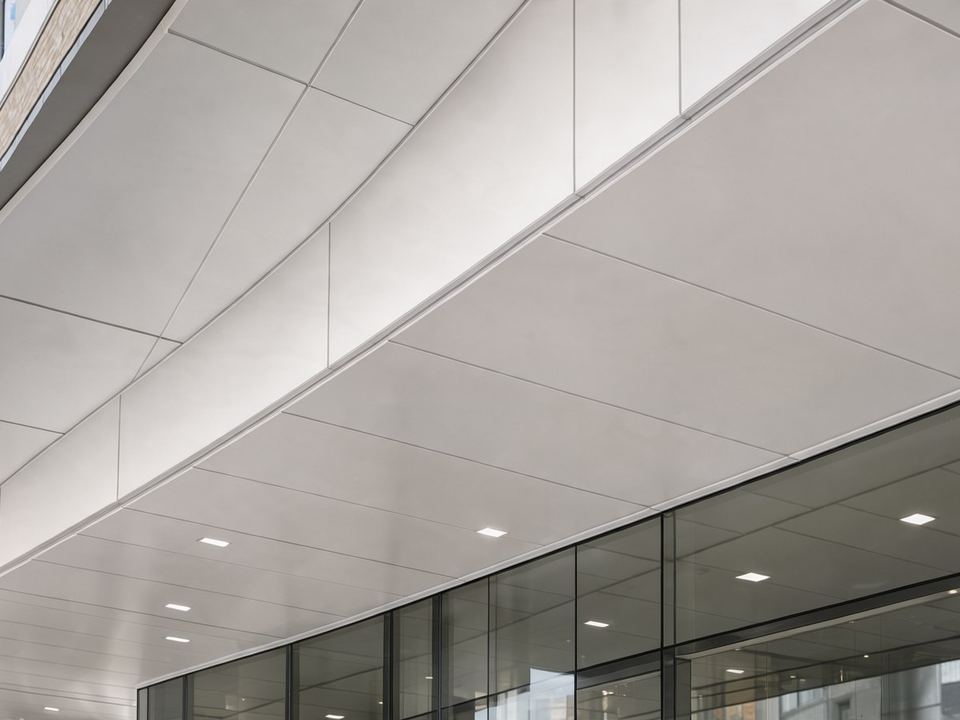
AI-generated illustration: a metal panel soffit and canopy fascia over a storefront

AI-generated illustration

AI-generated illustration: commercial entry canopy with metal soffit panels adjoining a plastered exterior wall

Short answer

We repair, refinish and install traditional Portland cement stucco on commercial facades and residential walls throughout Albany and the Capital Region. Our own crews apply new three-coat stucco over metal lath and drainage planes or directly onto concrete block, rebuild hollow delaminated sections, replace corroded accessories, and tie stucco cleanly into metal copings and wall panels. Send photos or plans.

Key facts

Service area
Albany, Schenectady, Troy, Saratoga Springs, Clifton Park, Glens Falls and jobs within about two hours of Albany.
Season
Panel installation runs most of the year. Sealant joints and barrier work are done on dry, frost-free surfaces.
Who does the work
Our own crews, from The Dom Construction Group LLC.
Insurance
General liability, umbrella and workers' compensation insurance; certificates on request.
Estimates
Free. Start with 3–5 photos by text, or use the form.
Reply
We reply within one business day, Monday to Friday.

Traditional three-coat Portland cement stucco

Unlike foam-backed EIFS, which sounds hollow when tapped, traditional stucco is a hard, dense Portland cement plaster reinforced with metal lath or bonded directly to masonry. It handles impact well, resists fire, and remains a staple on commercial storefronts, schools, civic buildings, plazas and older homes throughout Albany, Schenectady, Troy and Saratoga Springs.

On framed commercial or residential walls, our own crew installs three-coat cement stucco over sheathing protected by a weather-resistive barrier and drainage plane:

  1. Lath and accessories. Corrosion-resistant galvanized or stainless expanded metal lath is fastened into framing alongside weep screeds above grade, casing beads around openings, and expansion or control joints laid out to divide large wall areas into balanced panels.
  2. Scratch and brown coats. The first cementitious coat keys fully through the lath and is scored horizontally; once firm, the brown coat builds thickness, establishes a flat plane under a rod and cures steadily to minimize shrinkage cracking.
  3. Finish coat. A cementitious or elastomeric-acrylic textured finish coat is floated evenly from joint to joint for uniform color and grain.

Sounding and rebuilding delaminated or cracked stucco

Upstate New York freeze-thaw cycles punish neglected stucco details. Water entering through unsealed parapet caps, window sills without end dams, or wide structural cracks saturates the plaster and rusts older steel lath or fasteners behind the surface. Once frost expands inside that damp plane, sections bulge outward or sound hollow when tapped with a hammer.

Skimming thin patch compound over loose stucco fails within a season. Our field team—bringing about 19 years of experience in stucco, EIFS, masonry and coatings—sounds the elevation, saws clean perimeter lines back to solid plaster, removes delaminated material, replaces rusted lath or damaged paper, fixes the flashing defect that admitted water, and rebuilds the patch in proper coats matched to the surrounding sand or dash texture.

Direct-applied stucco over concrete block and masonry

Many Capital Region retail plazas, additions and utility structures have concrete masonry unit (CMU) or poured concrete walls that need a clean architectural finish. Where the masonry substrate is sound, unpainted and free of bond-breaking form oils or efflorescence, Portland cement stucco or polymer-modified base and finish coats can be applied directly to prepared block without furred lath, dressed with surface-mounted control joints and drip screeds.

When a repaired commercial or residential stucco facade shows decades of mismatched patches, we also apply breathable mineral or elastomeric waterproofing coatings across complete elevations so old repairs blend cleanly while allowing interior moisture vapor to pass outward.

Detailing stucco against metal copings and trim

Mixed-cladding buildings regularly combine cement stucco fields with metal wall panels, plate panel column covers, aluminum canopies and metal parapet copings (we build commercial wall facades and copings, not metal roofs or house siding). Tight casing-bead terminations with bond-breaker tape, backer rod and low-modulus silicone sealant prevent rigid cement plaster from cracking against thermally moving aluminum.

Because The Dom Construction Group LLC self-performs stucco, metal panels, sealants and company-owned supported pipe scaffold, general contractors and owners can place the entire facade scope under one insured subcontractor. Call or text (518) 888-7938 or send drawings via our bid request page. We reply within one business day, Monday to Friday.
What cracks, bulges and stains mean on stucco

Reading surface symptoms on traditional Portland cement plaster before deciding how much to open up.

Hollow sound or outward bulge when tapped

Plaster looks mostly intact from a distance but sounds drum-like under a hammer tap or bows away from the wall.

Usually means
Water behind the stucco has rusted steel lath or fasteners, or freeze-thaw ice has broken the scratch-coat key.
What we do
Saw-cut back to firmly anchored stucco, replace corroded lath and damaged paper, fix upper flashings and rebuild three-coat cement plaster.

Long stair-step or wide straight cracks

Cracks wider than a business card following underlying concrete block joints or framing transitions.

Usually means
Structural movement, missing control joints across long elevations, or stucco locked tight against dissimilar framing.
What we do
Install expansion or control joint accessories where movement recurs, route and seal active joints, or re-key and coat stabilized cracks.

Map-like hairline craze cracking

Fine web-shaped surface cracks across an otherwise solid, tight cement stucco elevation.

Usually means
Rapid drying shrinkage in the original finish coat or decades of thermal cycling on an unpainted cement surface.
What we do
Sound the wall to confirm solid bond, clean thoroughly and bridge fine craze lines with a breathable elastomeric or mineral facade coating.

Rust spots or white efflorescence streaks

Reddish pinpoints along corners and screeds, or chalky white salt deposits blooming after rain.

Usually means
Cut galvanized accessories rusting in damp zones or trapped moisture dissolving salts out of cement mortar and CMU backup.
What we do
Stop water entry at copings and sills, replace rusted beads with corrosion-resistant trim, clean efflorescence and apply vapor-permeable finish.

Cement stucco repair and installation questions

How can you tell whether an exterior plastered wall is cement stucco or EIFS?

Knock firmly on the wall with your knuckles. Traditional three-coat Portland cement stucco is roughly 3/4 to 7/8 inch of dense mortar over lath or masonry, so it feels hard and sounds solid like stone or concrete. EIFS places a thin reinforced coat over foam insulation board, producing a noticeably hollow, drum-like sound and slight give under firm pressure.

Why do patches on older stucco walls sometimes crack or pop loose after one winter?

Two mistakes cause most failed stucco patches: leaving delaminated plaster or rusted lath behind the repair, and using an overly hard mortar mix on a softer existing wall. If the water source above the patch is not flashed and the repair mortar cannot move at the same rate as the surrounding plaster, freeze-thaw expansion shears the bond line.

Where are control joints needed in new three-coat cement stucco?

Portland cement plaster shrinks slightly as it cures and moves with seasonal temperature shifts. Control and expansion joints break large elevations into smaller, roughly rectangular panels—commonly around window and door corners, floor lines, framing transitions and regular field intervals shown on the architectural drawings—with metal lath discontinued across the joint where full movement relief is specified.

Can cement stucco be applied directly onto unpainted concrete block walls?

Yes. Clean, structurally sound concrete masonry unit (CMU) walls provide good mechanical suction for direct-applied Portland cement scratch and brown coats or polymer-modified base coats without metal lath. However, painted block, glazed masonry, efflorescence-stained surfaces or mixed substrates require either mechanical lath attachment over a weather barrier or manufacturer-specified bonding preparation so the plaster stays anchored.

How do you blend new stucco repairs into a weathered commercial or residential facade?

Matching stucco happens in two stages: texture first, color second. Float timing, sponge or trowel technique and aggregate size are adjusted on the finish coat to match existing sand, dash or swirl patterns. Because raw cement cures to a slightly different shade than decades-old weathered plaster, applying a breathable mineral or acrylic coating from break line to break line evens out color.

Get a free cement stucco estimate

Send architectural sections for new stucco or clear daylight photos of cracked or delaminating walls.

Rather text? Text photos to (518) 888-7938

What are you seeing? (optional)
Add details (optional)
Property (optional)
How soon? (optional)
Best way to reply (optional)
Photos (optional, up to 5)

Add 3–5 photos: one close-up and one of the whole wall. We shrink them before sending.

    required. We reply within one business day, Monday to Friday. We use your details only to reply to this request. Privacy

    Rather text?

    (518) 888-7938

    Call or text Monday–Friday, 7 AM–5 PM.

    Adjacent exterior envelope trades

    Planning stucco repairs or a commercial stucco scope?

    Book spring work now. Winter assessments and estimates available.